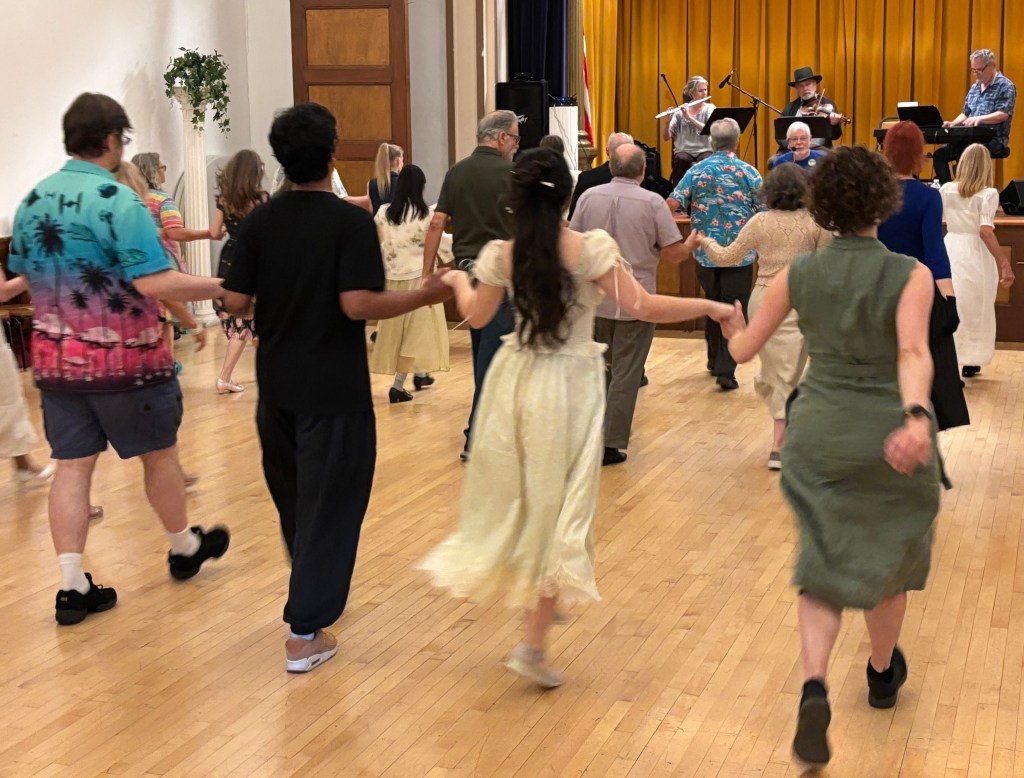
English Country Dance (often referred to as ECD) is a fun, friendly, community form of dance that originated in England during the Renaissance (as best we can tell.) Most groups proclaim “no partner needed, no experience needed: please join us!”
After its beginning in the Renaissance, ECD evolved and changed while staying extremely popular well into the 19th century. In that stretch of time, thousands and thousands of different English country dances were created and published, with many different tunes and patterns.
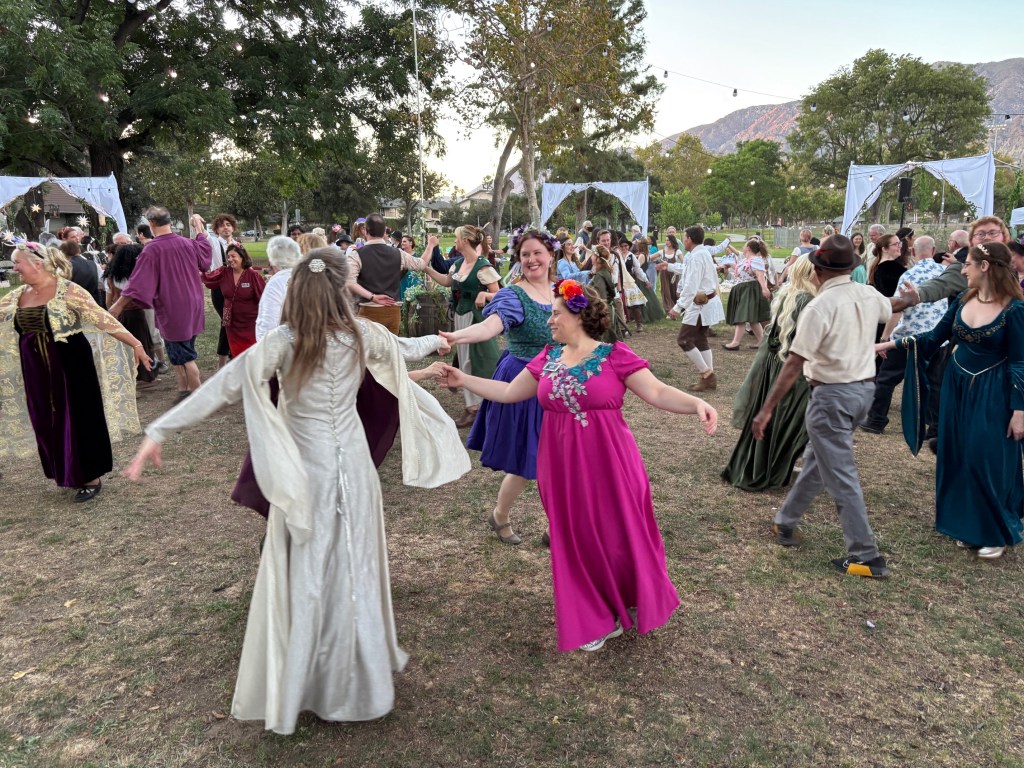
Then ECD fell out of fashion, only to be revived in the early 20th century by Cecil Sharp and many others, spurred by the turn-of-the-century folk revival. When these folks brought back ECD, they chose to teach dances from many different historical periods, so an evening of ECD might include dances from 1651, 1721, and 1796 all happily jumbled together.
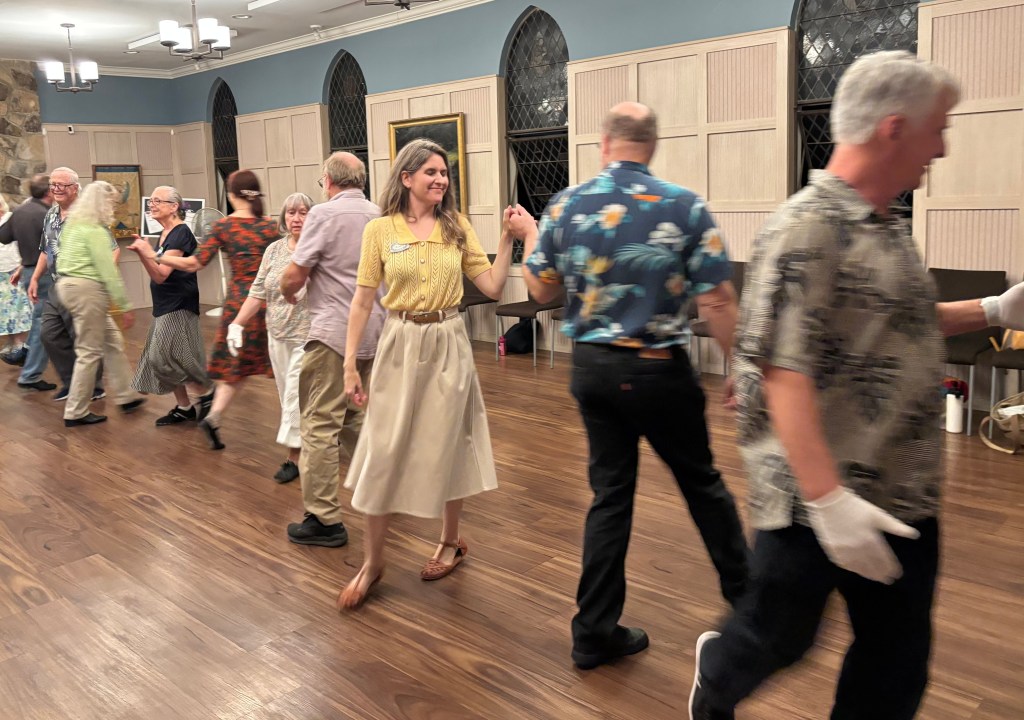
Eventually folks started writing new English Country Dances, which was initially was quite controversial, as ECD was viewed as a form of historical folk dance, so how could new dances be written? But, as the great Pat Shaw wrote, “We are the folk.” So many new dances have been added to the repertoire, and an evening often includes dances from 1651 through 2026!
There are many groups worldwide who practice ECD. Commonly, a group has regular classes which are weekly, monthly, or somewhere in between. Most often, these are drop-in classes, so you can attend one or all, starting whenever you like. These classes are usually aimed at dancers of any level of experience, and the caller teaches the dancers what they need to know. Some classes have live music, while others use recorded music.
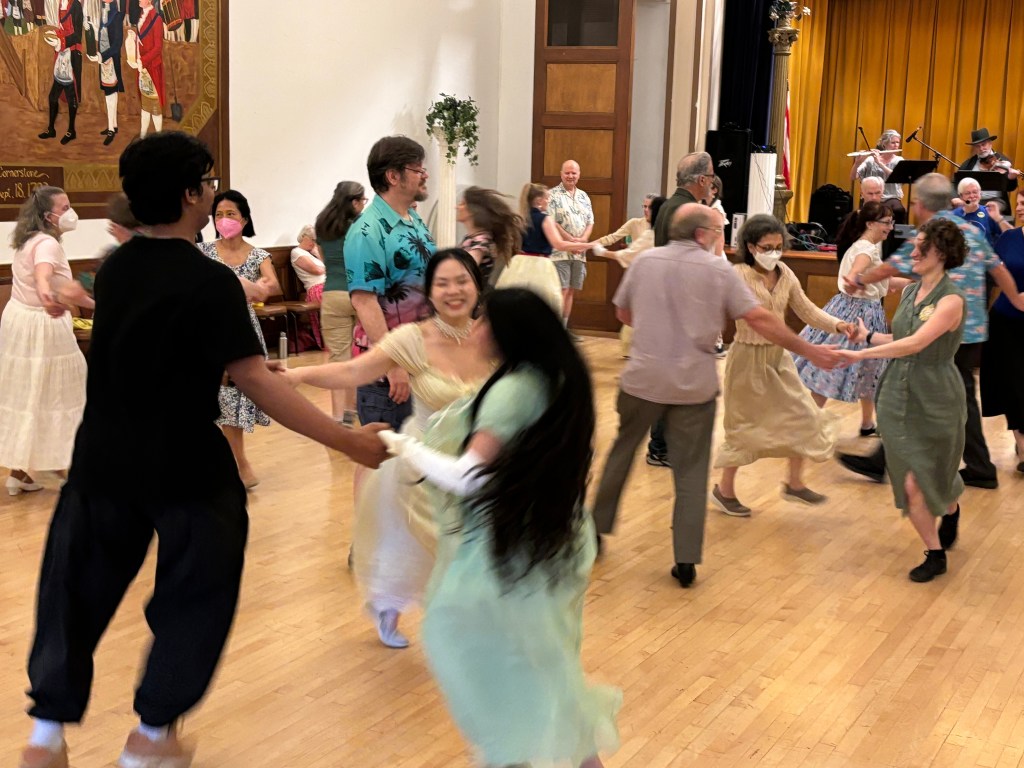
Many groups also put on balls or other events, and these usually require some experience to attend, and pre-registration. Many such balls have special prep classes beforehand to teach the dancers the particular dances from the ball. Some balls may have a theme (such as Jane Austen, or Alice in Wonderland), but others may just be focused on dance; most are held in ballrooms, but some are in gyms or out of doors.
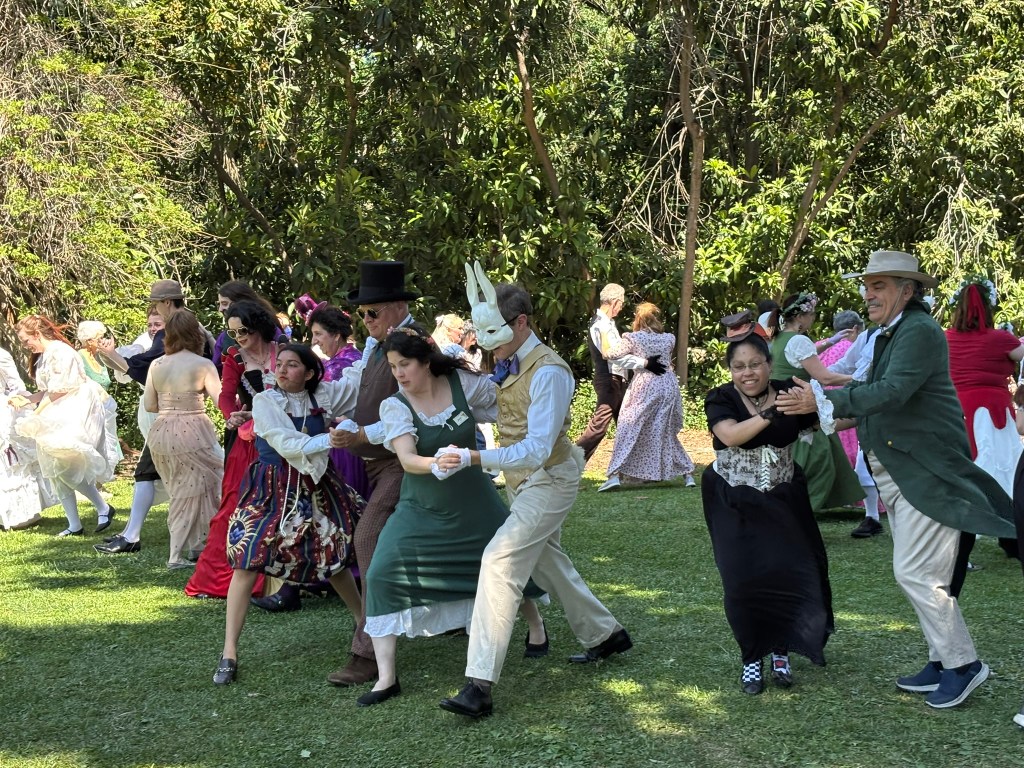
Typically, each English country dance has its own tune (which can be slow, fast, or in-between; lyrical or rowdy or wistful….or pretty much anything else that music can express!) A typical evening will have perhaps 7 – 12 different dances done, and at most ECD groups, each dance is individually taught, walked through, and prompted by a caller. After the teaching and walkthrough, each dance will generally take about 3 – 15 minutes to dance (depending on the dance, the size of the room, etc).
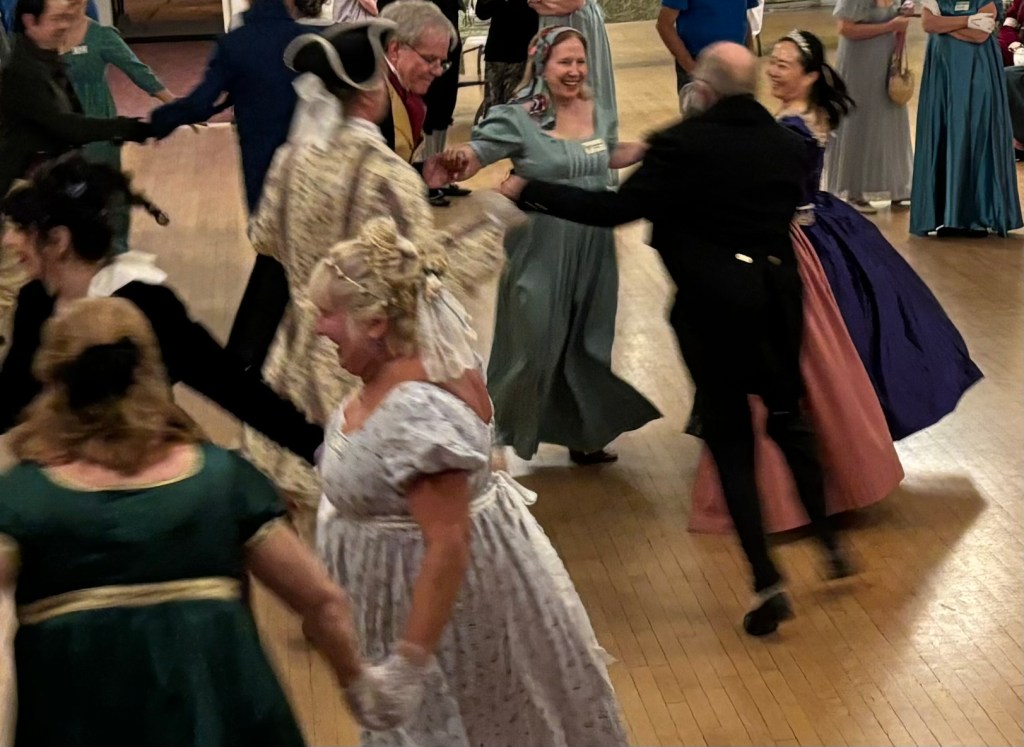
Each dance is made up of a series of different figures in a particular order. Figures can be as simple as “right-hand turn your partner”, but can grow far more complicated in the more challenging dances.
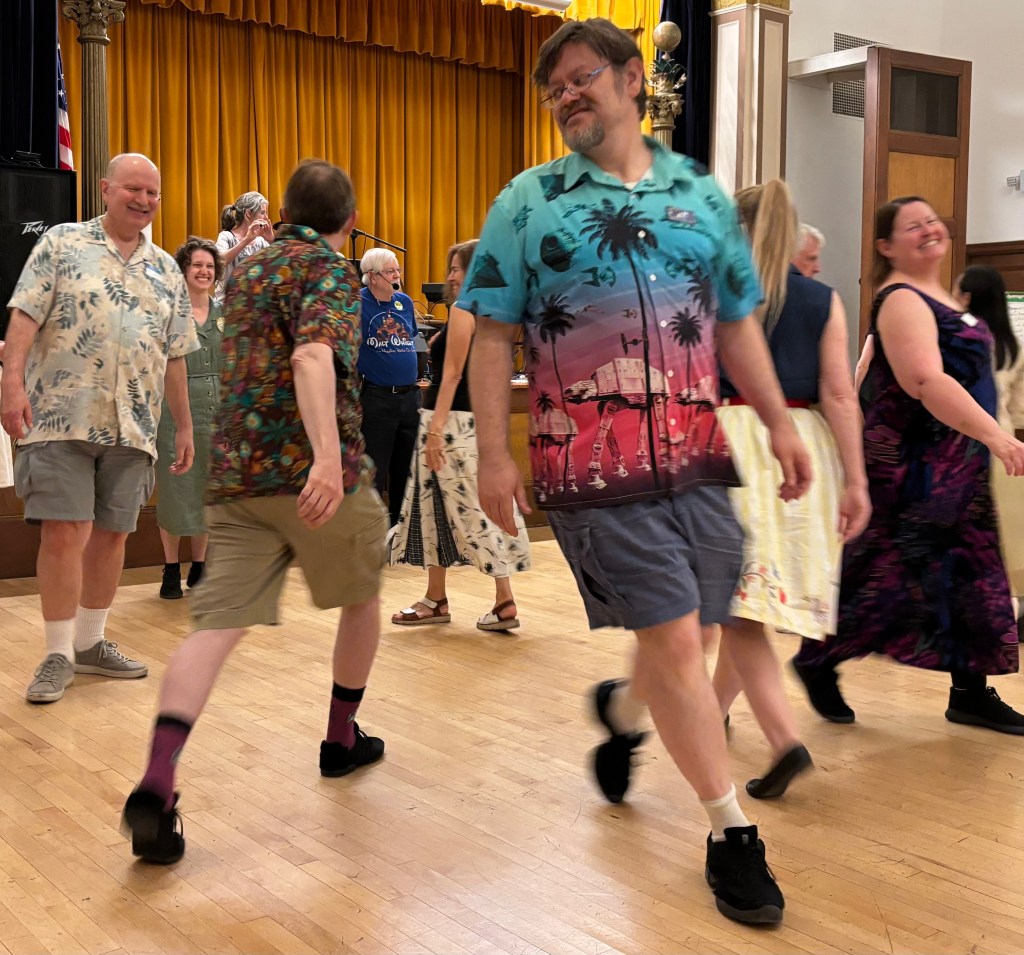
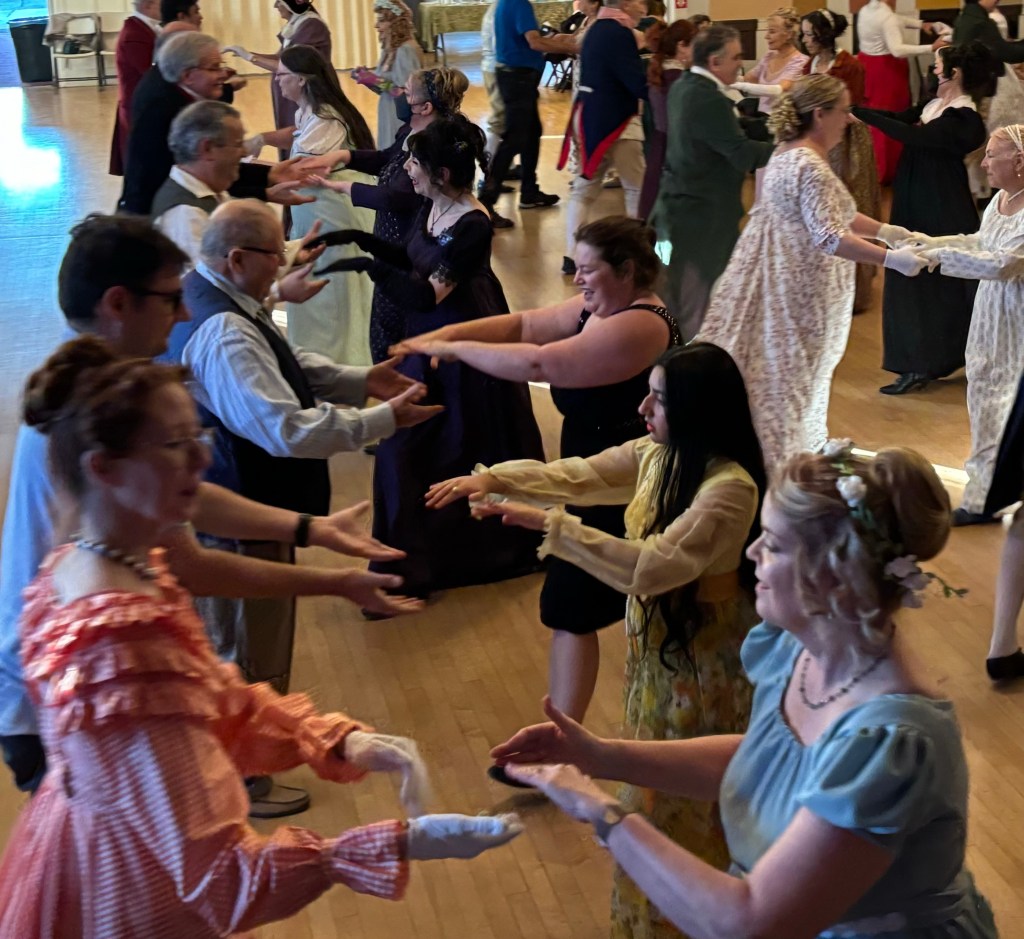
Typically, a dancer has a different partner for each dance (though in a few dances one has no partner, and in some one has multiple partners). A set will be made up of multiple pairs of partners, which means that everyone ends up dancing with everyone in the room in some way…it’s very social! It’s a very comfortable sort of dancing for folks who come solo, because everyone dances with everyone.
If you still can’t picture an English country dance, think of the sort of dancing you see in Jane Austen movies, or picture a more sedate (and less twirly) version of square dancing.
 Cara King